

What I Learned at a Conference on Drinking
From the invention of moderation to the return of temperance

Two things struck me about Dublin. The first was how cool it was compared to the rest of Europe. The second was how many tourist pubs there are.
It was the end of June, and I was in Dublin to attend a conference at the wonderful Museum of Literature Ireland, or MoLI in honour of Molly Bloom.
There were only a few of us, so we got the room upstairs with a big table to sit around. The coffee room had an antechamber with a secret staircase, which of course we all explored.
When I say ‘we’, I mean a bunch of academics: historians, professors of literature, a geographer, a philosopher, an anthropologist, an epidemiologist, and a sociologist, among others. They came from Canada, Poland, the UK and Ireland, and all of them were doing work that intersected with an area called drinking studies.
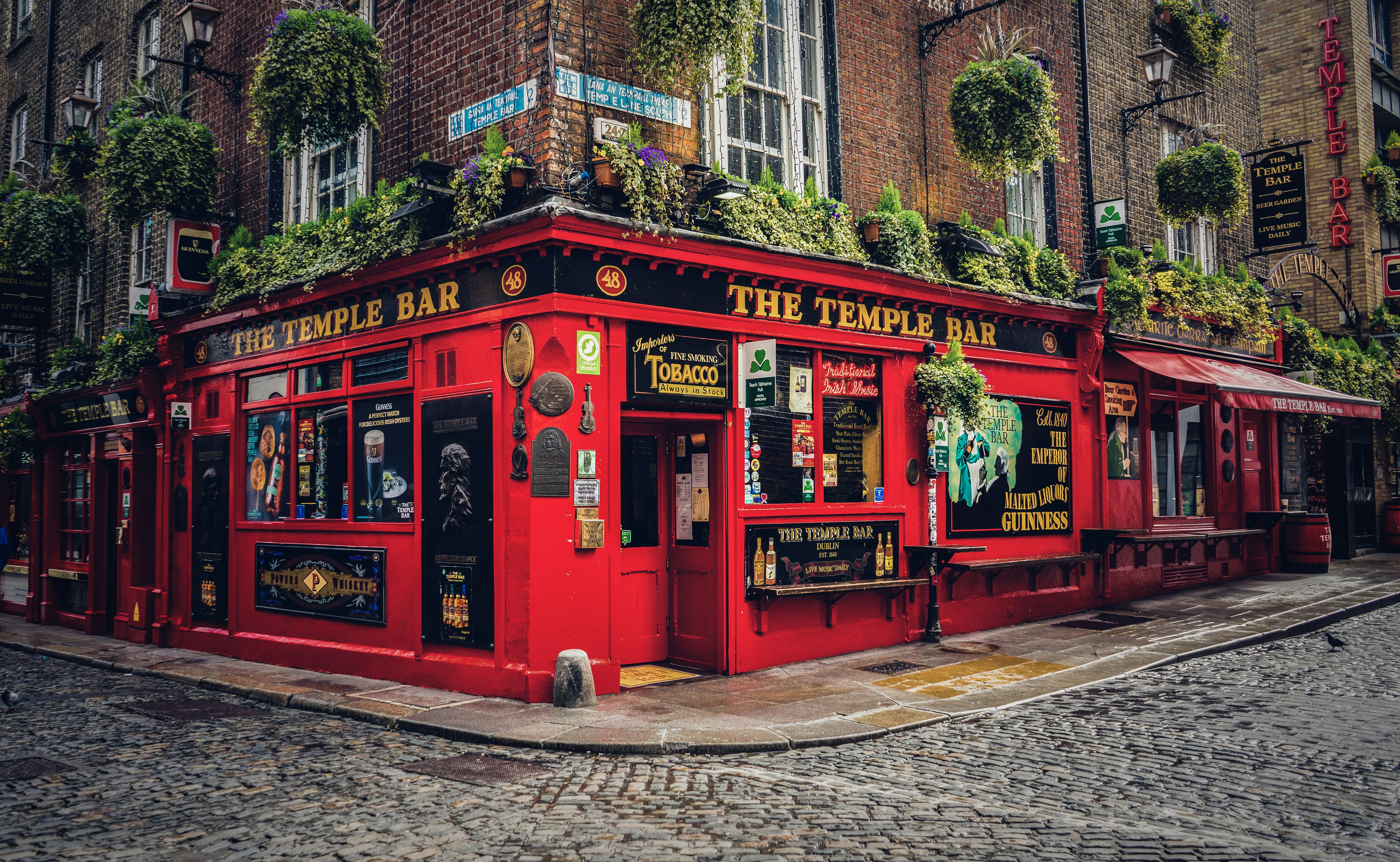
Photo by Leonhard Niederwimmer on Unsplash
Drinking studies, which I’d never heard of, is an interdisciplinary study that treats alcohol as a cultural and social practice, rather than as a drink or a health hazard.
It was an invitation-only meeting and I was asked not to record or quote people, so this post is a recap based on some very dodgy note-taking, plus my imperfect memory.
My overwhelming impression is that the way wine and spirits people talk about history and culture is very superficial, and much of the ‘wine is history and culture’ discourse is really more of a marketing message than anything substantive — and maybe it’s time to remedy that.
The first order of business was commiserating about the European heatwave and remarking on how pleasant Dublin was. Some people had just come from a conference in Paris, and they were like refugees from a war zone. Those who hadn’t experienced it had no idea how hideous and dangerous it was. I had arrived from southwest Germany, three hours by train from Paris, where the heat was unrelenting, unrelieved by air conditioning or even cool spaces.
(This, by the way, is the reason it’s been so long since the last Drinks Insider newsletter — I spent much of this time since late May sitting motionless next to a fan, reading John Wyndham novels.
When I wasn’t doing that, I was moving house. Did you know in Germany you have to provide your own kitchen? Then you have to find someone to uninstall it when you leave, which is no joke in July, when most of the continent is on holidays and the people who are still around all have heat stroke.)
Anyway, back to the conference. Here is some of what I learned, in no particular order.
Why drinking is so hard to study
The most important thing is that researching drinking and drinking culture is extremely difficult, because drinking is so ubiquitous that it’s unremarkable. It’s like that game that keeps turning up in ancient Egyptian tombs that nobody knows how to play, because it was so widespread nobody wrote down the rules.
In other words, people have never spent much time writing about drinking, and certainly not about the habits of ordinary people. Where people did write about it, they tended to focus on aberrant or unusual behaviour. Or, I guess, the drinking of aristocrats.
On top of that, social norms were often so different that they’re difficult to parse. As one historian said, how is it possible to know what people meant by drunkenness or sobriety, when ‘sober’ might mean someone stuck to wine?
Then there’s the problem of things falling out of the public record. Take the gin craze of the 18th century, famously immortalised in William Hogarth’s Gin Lane, which showed London collapsing into drunkenness.
The gin craze subsided rapidly in the middle of the century, and historians have previously speculated it was because of harsh new regulations, or poor grain harvests.
But maybe, suggested one historian, people simply got bored of it. Maybe lots of things are just fashions that come and go — which makes the historical records even more unreliable, because once people get tired of something, they stop writing about it.
The rise of moderation
Another discussion I found interesting was around the question of alcohol and self control.
The ancients wrote a lot about the virtues of moderation and the vice of drunkenness. But in agrarian societies, there was a lot of wriggle room around drinking, depending on the occasion. Feasts, festivals and banquets could produce prolonged drinking, but recovery time was often built into the calendar.
That changed in the 18th century with the rise of the Industrial Revolution. Factories rely on workers turning up at fixed hours and staying through their shift; absence or incapacity means disrupted production or, worse, serious injury on the job.
The meaning of moderation shifted from avoiding disgraceful drunkenness, to being able to self regulate. The drinker was now required to remain sober, reliable and punctual.
Moderation in the modern sense, therefore, is intrinsically tied to economic productivity — leading inexorably to today’s optimisation culture.
Ireland, alcohol and social control
Ireland is exactly the right country to have a conference about alcohol, not least because it’s built a tourism offering on drinking. There are mock-traditional pubs on every corner, and a wide number of distillery tours on offer. And, of course, there’s the ubiquitous Guinness harp everywhere.
We repaired to one of these pubs after the first day, and it was pretty much wall-to-wall corporate brands.
Ireland is also the country that introduced a sweeping set of alcohol reforms that have attracted international scrutiny. In 2015, health minister Leo Varadkar (a medical doctor) launched legislation that treats alcohol as a population-level problem, rather than one of individuals. His successor took on the project, which became The Public Health (Alcohol) Act 2018. It introduced everything from minimum unit pricing, to barriers in front of the alcohol section in the supermarket, to restrictions on advertising and sponsorship, to cancer warning labels.
This last measure ignited an international firestorm, with challenges from EU member states and WTO members. These challenges were presented by the temperance lobby as being the work of Big Alcohol, but they were actually driven by countries like Spain and Italy that didn’t want cancer warning labels on valued cultural products.
The warning labels were supposed to appear as of May 2026, but have been pushed back to September 2028, which the government blamed on international trade pressure.
One of the Irish academics in the room gave a passionate speech about the new restrictions, saying they were justified with historic slurs.
It was accompanied by a presentation about the way stories of Irish drunkenness had been used by the British as an excuse to colonise the Irish — they were positioned as a people in need of a firm hand. Conquered for their own good.
In many ways the contemporary public health measures repeat the same arguments that were historically used to repress the Irish.
After she finished speaking, a Polish scholar in the room said exactly the same slurs had been used against the Poles, also as a justification for conquest and repression.
That’s something worth repeating — that alcohol restrictions can be a form of social control, masquerading as a concern for health.
Someone from Ireland added how unpopular the new measures had been and speculated that could be the real reason the labels had been pushed back.
(And, in fact, I’ve heard people in spirits saying the same thing — that not only is there no desire to add warning labels, but some politicians are actively seeking a way to quietly drop them altogether.)
How insurance helped invent alcohol risk
Of course, the subject of temperance came up a lot. Another interesting thing I learned is that it was insurance that shaped our understanding of alcohol harms. In the beginning, insurers thought that non-drinkers were such a weird lot, they charged them higher premiums.
And then the accountants noticed that non-drinkers had better outcomes than drinkers, an observation that had all sorts of social and political consequences.
I also discovered that lurid temperance novels were wildly popular in the 19th century. A common plot went like this: a decent man has his first drink, then one thing leads to another and his family goes to rack and ruin. A child dies, or the man goes to prison, or somebody goes insane. In the background is a publican who’s coining it in.
These novels offered women a way to make money, so there was a strong economic incentive to produce more and more of them. It’s a good reminder that the temperance industry has its own economic drivers, which don’t get nearly enough scrutiny.
Temperance 2.0
And, speaking of temperance, one of the things that brought everyone together is a concern that it’s coming back under the guise of health. There was a lively discussion about whether it’s time for scholars to wade into the public debate, or whether they should talk to policy makers, to highlight how many of today’s health arguments are just old temperance in new clothes — and to put the concept of pleasure back into the debate.
I don’t think it’s likely that a bunch of academics are about to burst into the media on the side of drinks any time soon; they weren’t sure if it was their role, or whether it would be a distraction from their work, or even whether they could boil their work down to a few media-friendly soundbites.
But I found it heartening to hear that there are other people who are as dismayed by this rising Puritanism as I am.
The conference wound up on day three with a rowdy lunch, and then everyone went their way. I had one afternoon left in Dublin and only had time to see one attraction. A number of people had recommended the Guinness Storehouse as an immersive historic experience.
I went to the Book of Kells.
A big thank you
I am more than aware that it’s been more than two months since I wrote a Drinks Insider post, and that it’s far too long for a newsletter with paid subscriptions. I have been amazed and heartened by how many people kept their subscription going over this period — and by all the new subscribers who turned up and plonked down money.
I just want to say that I take this seriously, and there are a lot more posts on the way.
I’d also like to note that I paid for my trip to Dublin with my Drinks Insider subscription money, so I hope you consider your contribution went to a good cause. I came away with a bunch of book recommendations, and as I work my way through them, I will summarise what I have learned.

Elizabeth Schneider, Wine for Normal People
You should be listening to Wine for Normal People
Elizabeth Schneider was one of the earliest wine podcasters, starting Wine for Normal People in 2011. Since then, it’s grown such that it reaches one of the biggest wine audiences in North America. Every time I speak to her, I’m blown away by her depth of knowledge and dedication — she’s even read the magisterial three-volume Australian Ark from cover to cover.
And she had me on the podcast recently! I love being interviewed by her, because she challenges every statement. We talked about the WHO, about the temperance industry, about international alcohol politics, and even my research project on GLP-1s.
She knows how to put a good episode together, so if you don’t listen to that one, go and listen to some of her other podcasts.
Speaking of podcasts…
Lulie Halstead and I have released several podcasts of A Question of Drinks in the past few weeks. We took apart Treasury Wine Estate’s decision to cut lots of brands; asked whether wine goes out of its way to be boring (Lulie: yes; me: no), and also looked at the unstoppable rise of the Spritz.
We get a lot of feedback and one of the comments I really liked was the person who said it was nice to hear two women disagreeing in public, while clearly liking one another.
Our next episode drops in two weeks!